Launch offer — valid today only

The Easiest Way to Prepare for the Able Seafarer and Lifeboat Operator Exams Every Topic Drawn on Its Own Page

Parts of a ship, knots, mooring lines, helm orders, Rules of the Road, lights and day shapes, buoys, the station bill and the lifeboat launch: in most study guides it's a wall of text. Here each topic fits on one page, with the drawing and what you need to remember. 73 illustrated pages.

SEE THE FULL TABLE OF CONTENTS

🔒 Secure checkout · PDF by email · 30-day guarantee

One topic per pagethe drawing shows you the rule and the text walks you through it
73 illustrated pages11 parts and 68 topics, from the Able Seafarer rating to the final review
Up-to-date sources46 CFR Part 12, the Navigation Rules (33 CFR Part 83) and NMC exam pages

This Is What the Pages You Will Study Look Like

One topic per page, the drawing that shows you how it's done and the boxes with what you need to know:

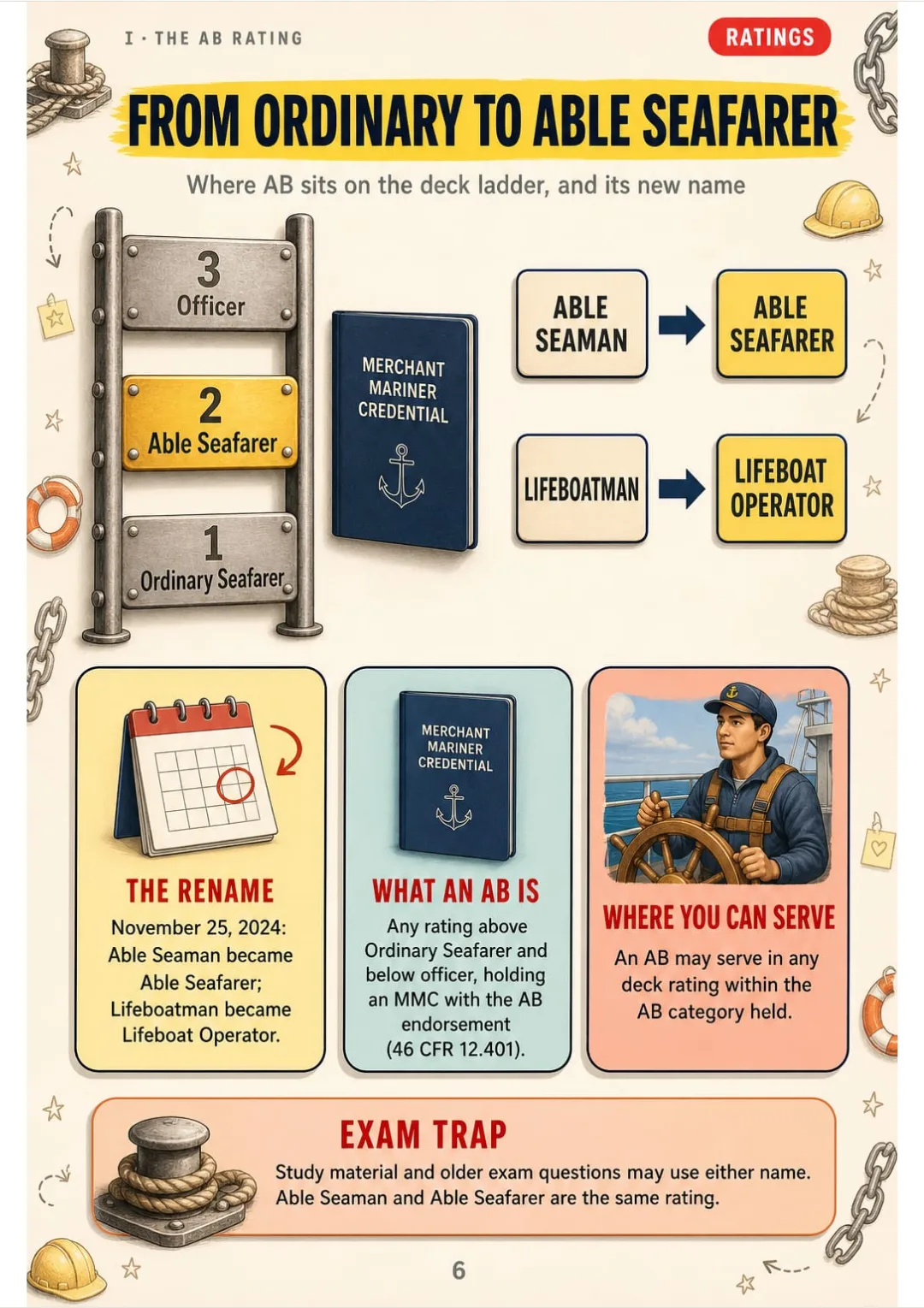
The deck ladder and the November 25, 2024 rename, per 46 CFR 12.401
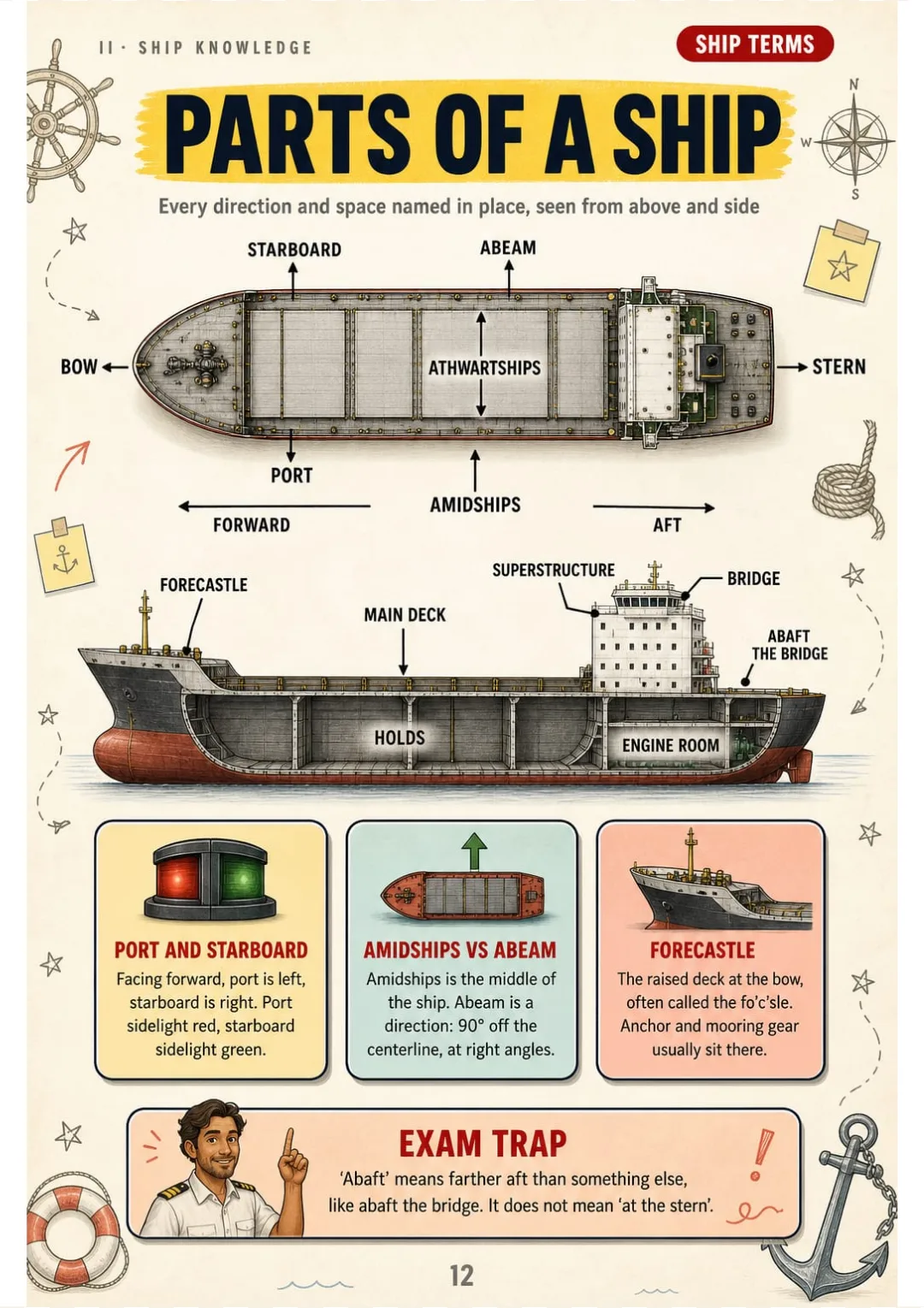
Abaft = farther aft than something, not 'at the stern'.
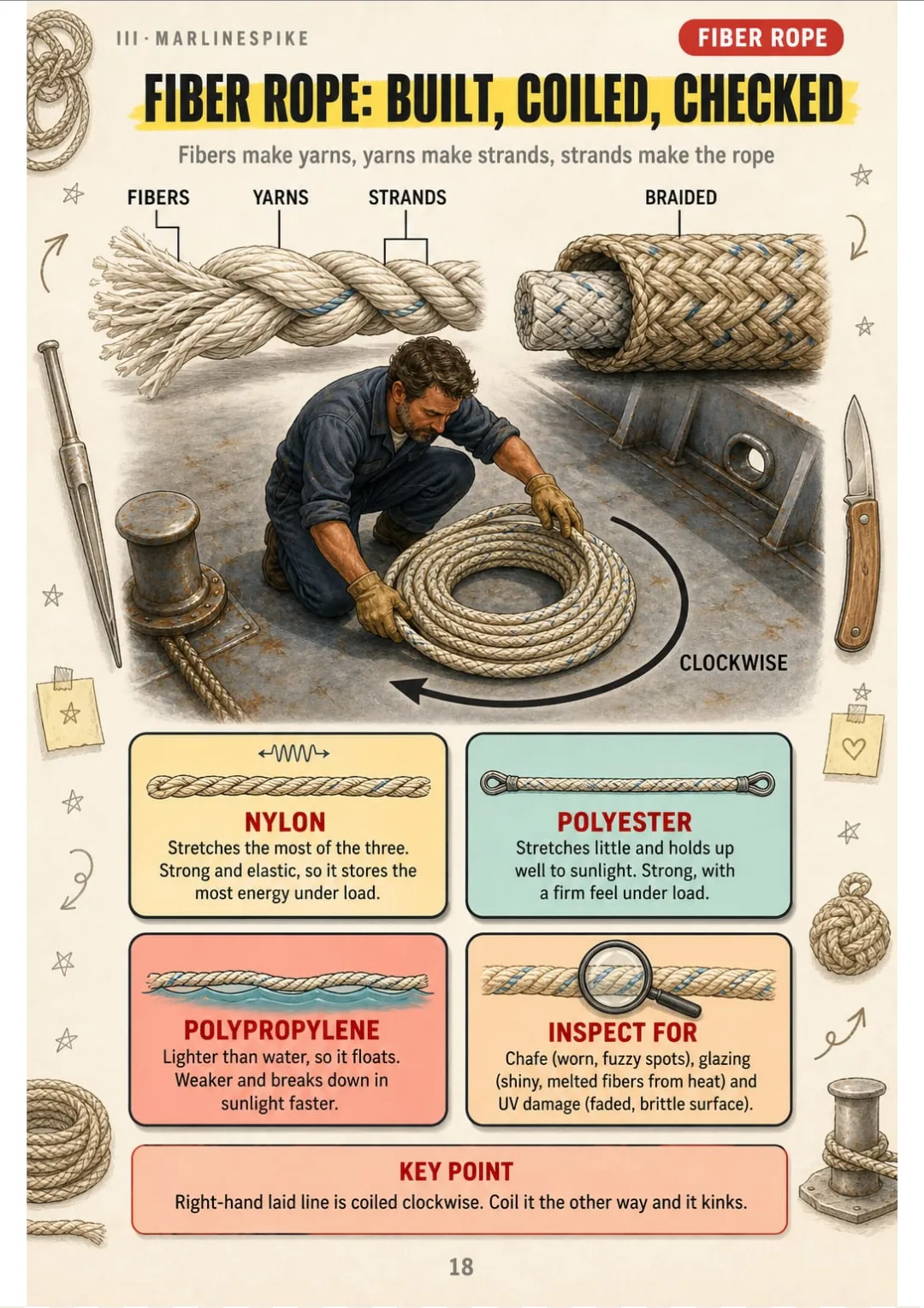
Fibers, yarns and strands drawn, plus the three fibers and the clockwise coil
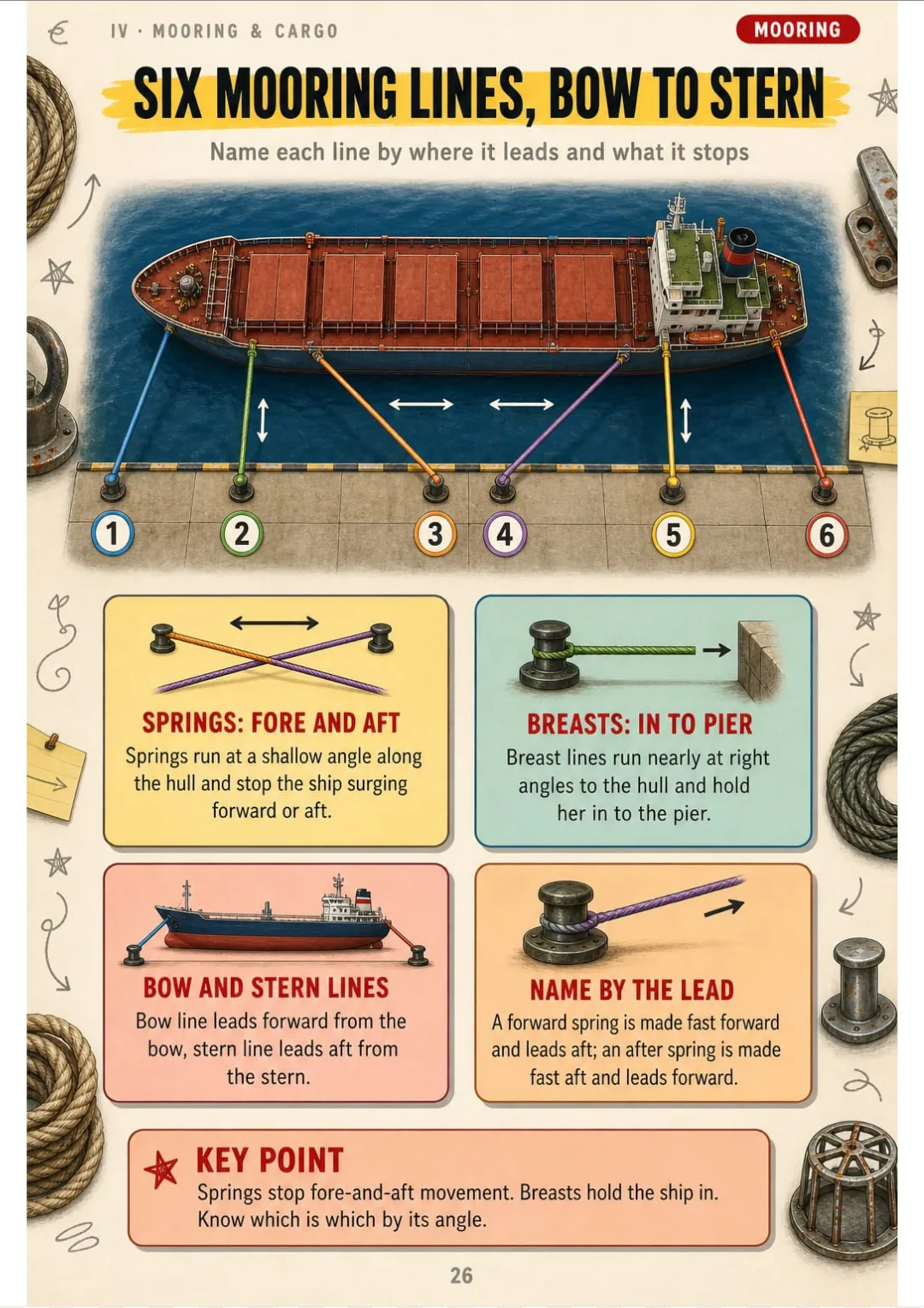
Bow line, forward breast, forward spring, after spring, after breast, stern line: numbered 1 to 6.
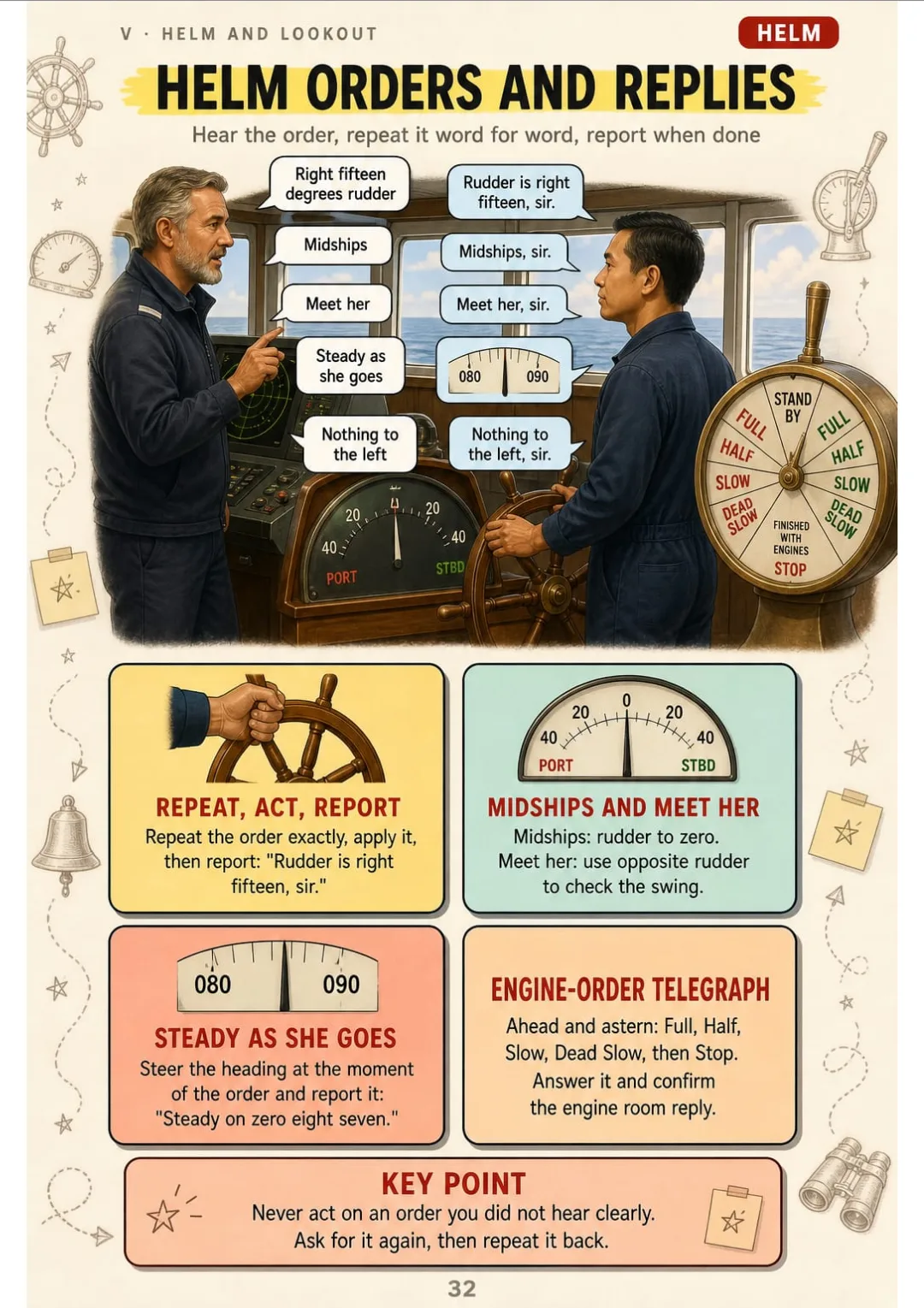
Five helm orders, the helmsman's repeat-back and the engine-order telegraph on one page
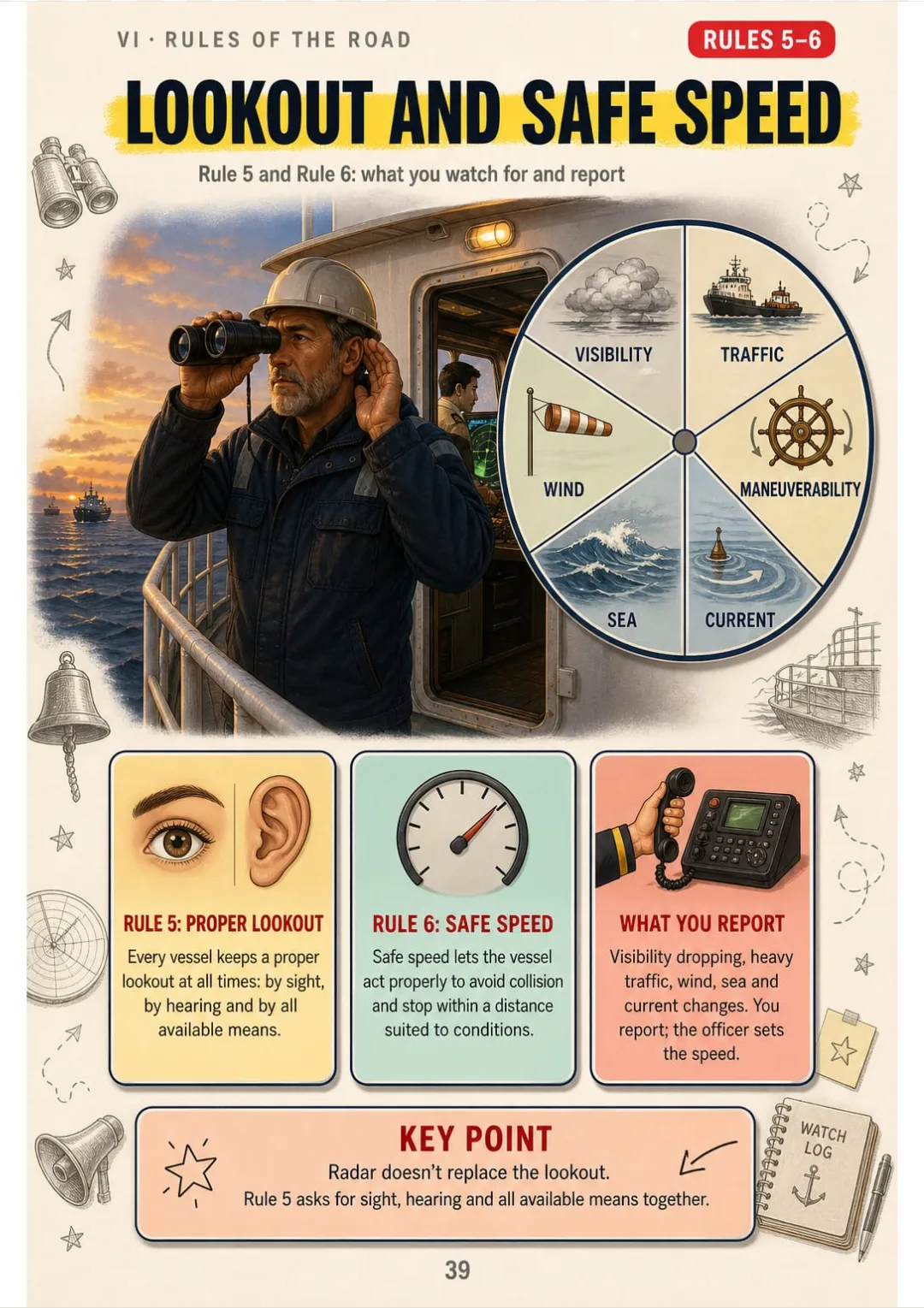
Rule 5 lookout by sight, hearing and all means · Rule 6 safe-speed factors on one dial
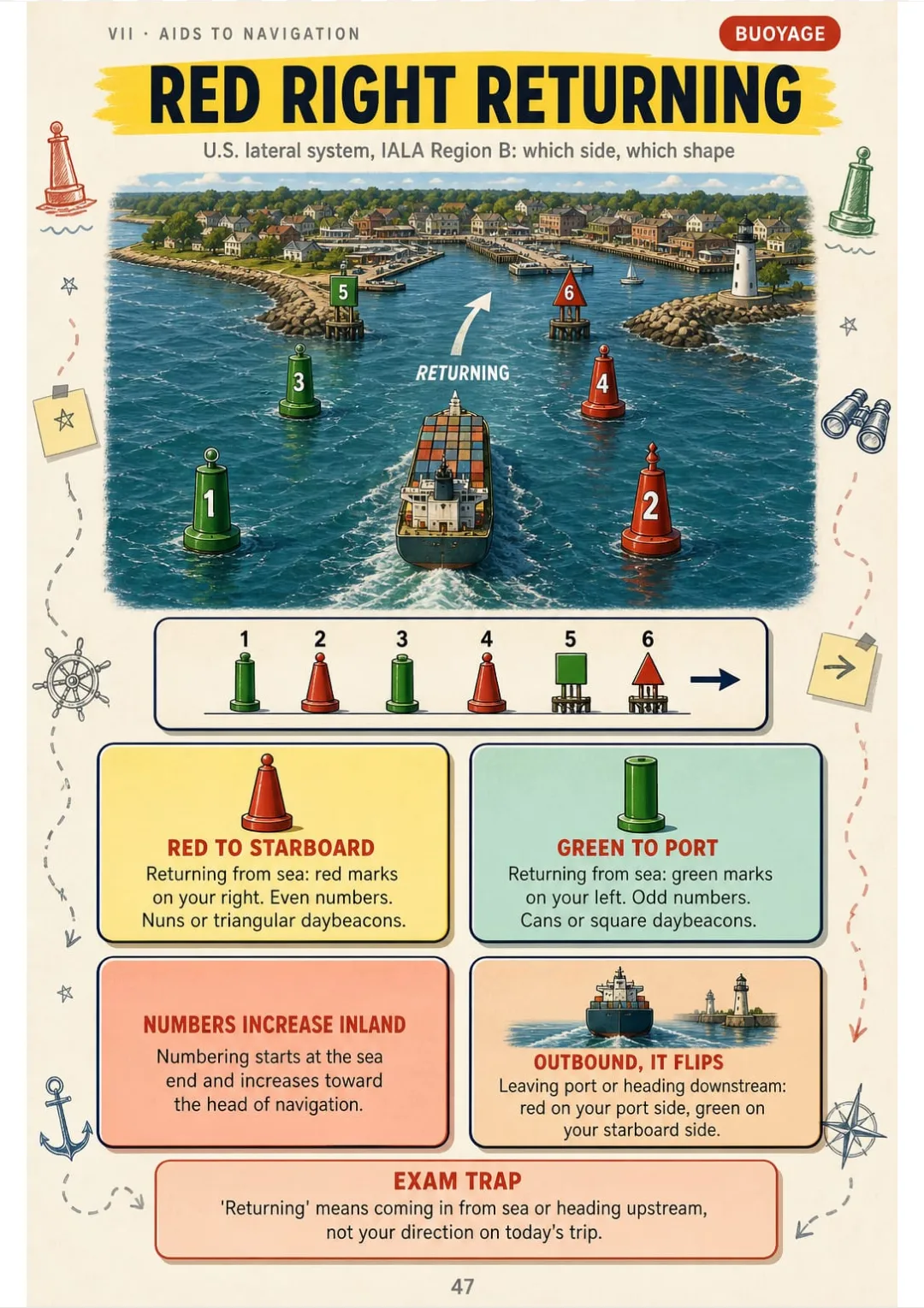
Red even nuns to starboard, green odd cans to port, numbers increasing from sea.
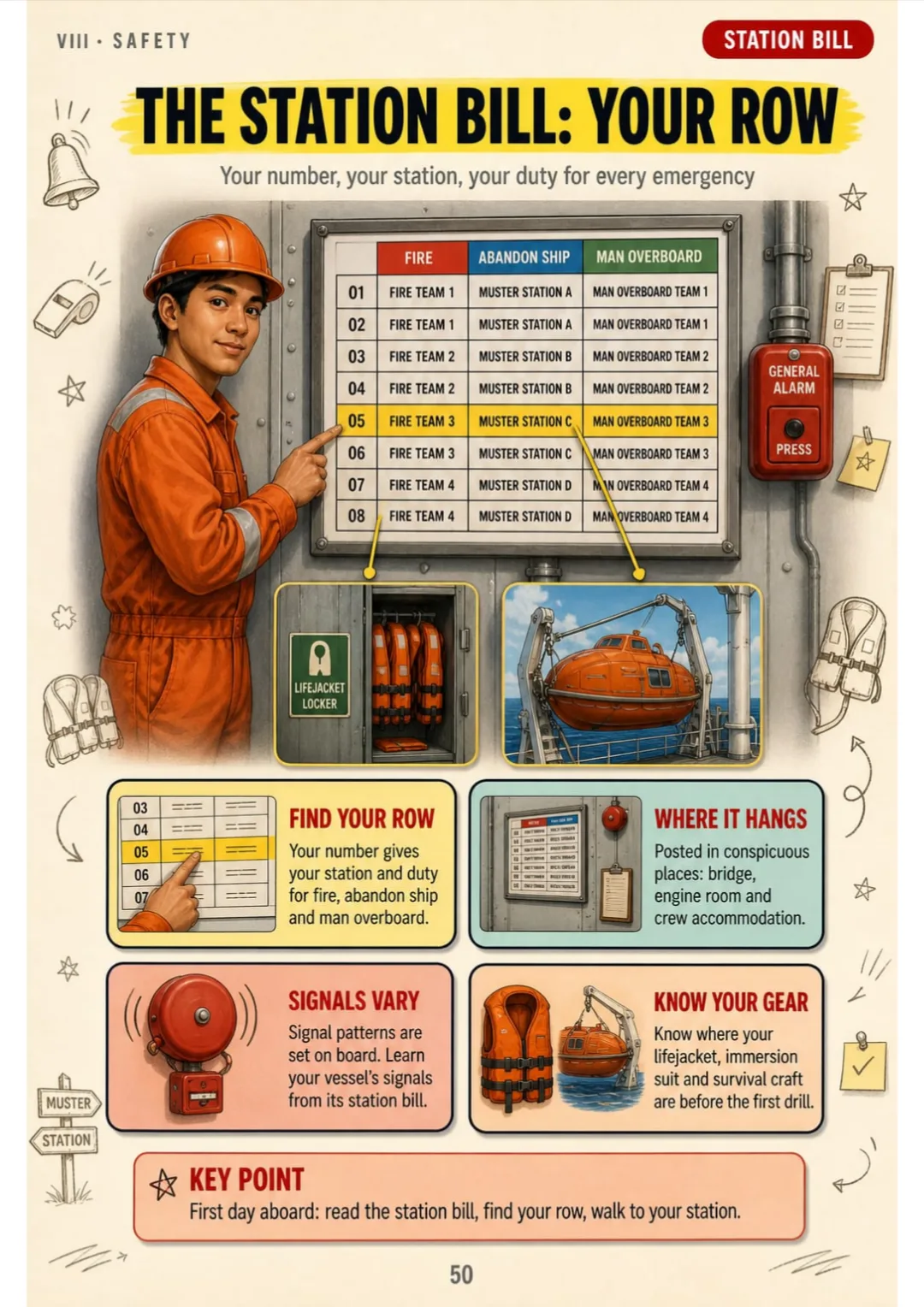
Station bill: your number, your station and your duty for fire, abandon ship and man overboard.

Swipe to see more →

These are real pages from the book. The table of contents is the full one: 11 parts and 68 topics.

The Problem Isn't You. Nobody Ever Laid It Out in Order.

You've read the section on fiber rope three times. You close the book...

...and you can't say what twists into what, or which way the coil goes. It was just lines of text.

Fibers, yarns and strands drawn, plus the three fibers and the clockwise coil

Here fiber rope is one page: fibers twisted into yarns, yarns into strands, strands into rope, nylon, polyester and polypropylene side by side, and right-hand laid line coiled clockwise.

And every topic around it gets its own page: wire rope, the knots for the demonstration, splices and whippings, stoppers and snap-back zones.

First you understand why it's done that way. Then the order sticks on its own.

SEE THE DIFFERENCE

Stop memorizing ship terms you can't picture:

THIS
  • Pages and pages of dense text
  • Ship terms without a single drawing
  • On exam day, you don't know where to start
The hull is the main body of the vessel; its forward part is the bow and its after part the stern. Forward denotes the direction toward the bow and aft the direction toward the stern. An object is said to be abaft another when situated farther aft than that object, a term not synonymous with being located at the stern. Amidships designates the middle portion of the vessel, while athwartships denotes a direction across the vessel, perpendicular to the keel, extending from port to starboard.
FOR THIS
  • Every part of the ship drawn
  • One topic per page, with the rules in boxes
  • You remember it because you've seen it
Abaft = farther aft than something, not 'at the stern'.
CONTENTS

Take a Look at the 11 Parts and 68 Topics

The rating, the ship, marlinespike, mooring and anchoring, helm and lookout, Rules of the Road, aids to navigation, safety, Lifeboat Operator, pollution and first aid, and the final review: 68 illustrated topic pages

IThe Able Seafarer Rating · pp. 6-11
  1. Deck Ratings: Ordinary to Able Seafarer
  2. The Six Able Seafarer Categories
  3. Sea Service for Each Category
  4. Lifeboat Operator, Required with Every AB
  5. The Exam: Two Modules or an Approved Course
  6. How to Use This Book
IIShip Knowledge · pp. 12-17
  1. Parts of a Ship
  2. Deck Machinery
  3. Hatches, Watertight Doors and Closures
  4. Draft Marks and Load Lines
  5. Stability Basics for Deck Ratings
  6. The Vessels You Will Crew
IIIMarlinespike Seamanship · pp. 18-25
  1. Fiber Rope: Construction and Care
  2. Wire Rope: Lay, Inspection and Discard
  3. Knots for the Practical Demonstration
  4. Splices and Whippings
  5. Stoppers and Belaying
  6. Blocks, Tackles and Mechanical Advantage
  7. Breaking Strength and Safe Working Load
  8. Snap-Back Zones
IVMooring, Anchoring and Cargo Gear · pp. 26-31
  1. Mooring Lines and Their Names
  2. Line Handling at the Pier
  3. The Windlass and Chain Shots
  4. Letting Go and Heaving In the Anchor
  5. Cargo Booms and Cranes
  6. Crane Hand Signals
VHelm and Lookout · pp. 32-38
  1. Helm Orders and Replies
  2. Steering by Magnetic and Gyro Compass
  3. Changing Over the Steering System
  4. Lookout Duties and Reports
  5. Bearings in Points and Degrees
  6. Gangway Watch and Security
  7. Relieving the Watch
VIRules of the Road for Deck Ratings · pp. 39-46
  1. Lookout and Safe Speed
  2. Head-On, Crossing and Overtaking
  3. Stand-On and Give-Way
  4. Running Lights
  5. Lights for Towing and Restricted Vessels
  6. Day Shapes
  7. Sound Signals in Sight
  8. Restricted Visibility Signals
VIIAids to Navigation · pp. 47-49
  1. Lateral Buoys: Red Right Returning
  2. Lights, Ranges and Daybeacons
  3. Reading Light Characteristics
VIIISafety and Emergencies · pp. 50-58
  1. Emergency Signals and the Station Bill
  2. Fire Triangle and Fire Classes
  3. Portable Extinguishers
  4. Fixed Systems and Fire Teams
  5. Abandon Ship, Step by Step
  6. Man Overboard
  7. Immersion Suits and Lifejackets
  8. Enclosed Space Entry
  9. PPE, Tagout and Working Aloft
IXLifeboat Operator · pp. 59-66
  1. Survival Craft Types
  2. Launching a Lifeboat: Davits and Falls
  3. On-Load Release Gear
  4. Liferafts: Davit and Throw-Over
  5. Survival Craft Equipment
  6. Boat Commands and Handling
  7. Pyrotechnics and Signaling
  8. Survival Priorities at Sea
XPollution and First Aid · pp. 67-70
  1. Oil and Garbage Rules on Deck
  2. Spill Response on Deck
  3. First Aid: Bleeding, Burns, Hypothermia
  4. CPR and Shock
XIFinal Review · pp. 71-73
  1. Terms Deck Ratings Mix Up
  2. Numbers to Remember
  3. Exam Day Plan

What If Every Topic Fit on a Single Page?

What if every topic fit on a single page?

Instead of rereading half a page on lights for towing vessels without being able to picture them...

...you open the page and find four night views side by side: towing, not under command, restricted in ability to maneuver and at anchor, each with the lights you'd actually see.

Five helm orders, the helmsman's repeat-back and the engine-order telegraph on one page

And mooring lines, helm orders, buoys, the station bill and the lifeboat launch become drawings and tables you read at a glance.

You stop rereading and start understanding.

That's Able Seafarer, Illustrated: 11 parts and 68 illustrated topics, one per page, each closing with a boxed takeaway (an EXAM TRAP, KEY POINT or rule of thumb). At the end: the terms deck ratings mix up, the numbers to remember and an exam day plan. What you see in order, you remember.

Because what your brain sees organized, it remembers.

Here Is What You Get with Able Seafarer, Illustrated:

Ipp. 6-11

The Able Seafarer Rating

Deck ratings from ordinary to able seafarer, the six AB categories, sea service for each one, why every AB also holds Lifeboat Operator (or Lifeboat Operator-Limited), the two exam modules and how to use this book.

IIpp. 12-17

Ship Knowledge

Parts of a ship, deck machinery, hatches and watertight doors, draft marks and load lines, stability basics and the vessels you'll crew.

IIIpp. 18-25

Marlinespike Seamanship

Fiber and wire rope, the knots for the practical demonstration, splices and whippings, stoppers, blocks and tackles, breaking strength and safe working load: so you tie the demonstration knots in order and know where not to stand in a snap-back zone.

IVpp. 26-31

Mooring, Anchoring and Cargo Gear

Mooring lines by name, line handling at the pier, the windlass and chain shots, letting go and heaving in the anchor, cargo booms and cranes, and crane hand signals.

Vpp. 32-38

Helm and Lookout

Helm orders and replies, steering by magnetic and gyro compass, changing over the steering system, lookout reports, bearings in points and degrees, gangway watch and relieving the watch.

VIpp. 39-46

Rules of the Road for Deck Ratings

Lookout and safe speed, head-on, crossing and overtaking, stand-on and give-way, lights, day shapes and sound signals: so you can say who gives way in each encounter and tell a vessel by its lights, shapes and whistle.

VIIpp. 47-49

Aids to Navigation

Lateral buoys and Red Right Returning, lights, ranges and daybeacons, and how to read light characteristics.

VIIIpp. 50-58

Safety and Emergencies

Emergency signals and the station bill, fire classes, portable extinguishers and fixed systems, abandon ship, man overboard, immersion suits and lifejackets, enclosed space entry, PPE, tagout and working aloft.

IXpp. 59-66

Lifeboat Operator

Survival craft types, launching a lifeboat with davits and falls, on-load release gear, liferafts, equipment, boat commands and pyrotechnics: so you can follow the launch sequence step by step and answer the boat commands without hesitating.

Xpp. 67-70

Pollution and First Aid

Oil and garbage rules on deck, spill response, first aid for bleeding, burns and hypothermia, and CPR and shock.

XIpp. 71-73

Final Review

The terms deck ratings mix up, the numbers to remember and your exam day plan.

At the end of the book: A boxed takeaway on every topic page (an EXAM TRAP, KEY POINT or rule of thumb), plus a final review with the numbers to remember and an exam day plan.

And That Is Not All: 2 More Books, Free

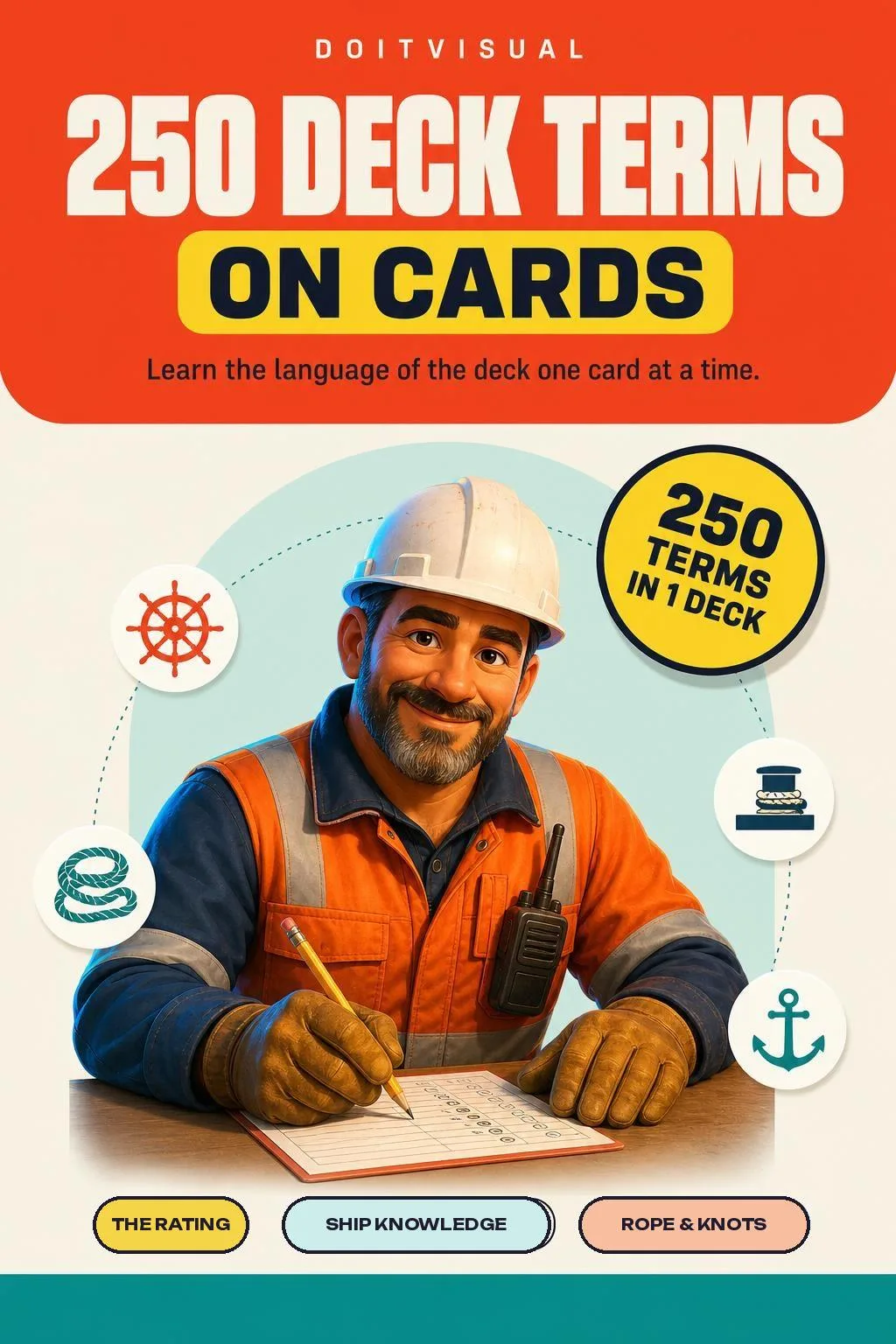
250 Deck Terms on Cards

BONUS 1: «250 Deck Terms on Cards»

Value on its own: US$ 17.90

Learn the language of the deck one card at a time: a term and a one-line definition on each card, 10 per page, from ship parts and mooring to buoys and survival craft. Print them and quiz yourself between watches.

The Exam Day Checklist

BONUS 2: «The Exam Day Checklist»

Value on its own: US$ 14.90

Know what to do module by module: what to bring, how to use your time, which pages to reread the week before and how to practice your knots for the demonstration.

Able Seafarer, Illustrated + 2 Free Books

  • Able Seafarer, Illustrated: 73 illustrated pagesUS$ 63
  • BONUS 1: 250 Deck Terms on CardsUS$ 17.90
  • BONUS 2: The Exam Day ChecklistUS$ 14.90
  • High-resolution PDF to printIncluded
Total value US$ 95.80
YOUR PRICE:
US$ 27
You save US$ 68.80
YES, I WANT ABLE SEAFARER, ILLUSTRATED FOR US$ 27

📄 This is a digital PDF book sent to your email: nothing is printed or shipped.

Secure purchaseEncrypted payment30-day guarantee

PDF by email: Able Seafarer, Illustrated reaches your inbox as a PDF, and the two free books come by email too. One-time payment, no installments or hidden costs.

Is This Book for You?

You're building your sea time

You're building your sea time

Ship knowledge, rope, mooring and the Rules of the Road, one topic per page, to review between watches or at home.

Your exam date is coming up

Your exam date is coming up

Both modules in order, a boxed takeaway on every topic page (often an EXAM TRAP) and a final review with the numbers to remember. Plus the knots for the demonstration and the lifeboat launch, step by step.

You already work on deck

You already work on deck

A quick visual review of what you do every day: mooring lines by name, helm orders, buoys and your row on the station bill.

To Sum Up: Here Is What You Get

US$ 95.80US$ 27
YES, I WANT ABLE SEAFARER, ILLUSTRATED FOR US$ 27

📄 This is a digital PDF book sent to your email: nothing is printed or shipped.

30DAYS
GUARANTEE

30-Day Guarantee

30-day guarantee: tell us what didn't work and we'll refund 100%.

You have 30 days to try Able Seafarer, Illustrated and the two bonus books. If it doesn't work for you, tell us what didn't work and we'll refund 100% of what you paid. One-time payment, no subscription.

Frequently Asked Questions

How do I get it?

By email, as a high-resolution PDF, to the address you enter at checkout. Read it on your phone or print it and take it aboard. The two bonus books, 250 Deck Terms on Cards and The Exam Day Checklist, come in the same email.

Is it a monthly payment or one-time?

One-time payment of US$ 27. No installments, no subscription.

Who is it for?

For ordinary seafarers and deckhands preparing for the Able Seafarer exam (formerly Able Seaman, AB) and the Lifeboat Operator endorsement (formerly Lifeboatman) in the U.S., and for anyone on deck who wants a visual review. If you're just starting out, you'll need sea service before you can sit the exam: Part I shows how much for each category. It uses the current U.S. rating names, the Inland and International Rules and U.S. buoyage (IALA Region B). Check the table of contents above to see the topics.

What sources is it based on?

46 CFR Part 10 and Part 12 Subpart D (12.401–12.409), the 46 CFR 10.219 fee table, the National Maritime Center deck rating exam pages and sample exams, and the Navigation Rules (COLREGS and Inland Rules, 33 CFR Part 83). Exam and sea service details can change: always check the current NMC exam guide and policy letters.

Is this official Coast Guard material?

No. It's independent study material. It is not affiliated with or endorsed by the U.S. Coast Guard or the National Maritime Center.

Does it replace an approved course?

No. It doesn't replace an approved course, your sea service, the practical demonstrations or your vessel's procedures and station bill. It's a visual review to study alongside them.

I already have the free NMC sample exams and the Navigation Rules. What does this add?

Use it alongside them. The sample exams tell you which answer is right, and the Navigation Rules give you the legal text. This book shows you why: each topic drawn on one page, with a boxed takeaway (often an EXAM TRAP) on the point that's easy to mix up. Any exam-style questions in it are written for this book and are not official questions from any exam.

Can I print it?

Yes. It's a high-resolution PDF: print the whole book or only the pages you need and take them aboard.

What if I don't like it?

You have 30 days. Tell us what didn't work and we'll refund 100%.

One Last Thing Before You Decide...

You don't have to reread the same page hoping it sticks this time.

You don't have to memorize lights and rules you can't picture.

And you definitely don't have to walk into the exam not knowing where to start.

There's an easier way to study for it, and it's one click away.

One-time payment: US$ 27 · Guarantee: 30 days · PDF by email

YES, I WANT ABLE SEAFARER, ILLUSTRATED FOR US$ 27

📄 This is a digital PDF book sent to your email: nothing is printed or shipped.